Bookshelf
The company I keep.
-

Author: Al-Ghazali Published: 1108
“Do not know the truth by men, but rather, know the truth and you will know its adherents.” “whoever thinks that the unveiling of truth depends on precisely formulated proofs has indeed straitened the broad mercy of God.” “Whoever reaches the point where all his cares are a single care, God Most High will save him from all cares in this life and the next.” “I knew with certainty that the Sufis were masters of states, not purveyors of words.” “one should be most diligent in seeking the truth until he finally comes to seeking the unseekable. For primary truths are unseekable, because they are present in the mind; and when what is present is sought, it is lost and hides itself.” “How great a difference there is between your knowing the definitions and causes and conditions of health and satiety and your being healthy and sated!” “Whoever acts according to what he knows, God will make him heir to what he does not know.” “'Men are asleep: then after they die they awake.' So perhaps this present life is a sleep compared to the afterlife.” “the close proximity of the true to the false does not make the true false, as it does not make the false true.” “There was indeed in their age, nay but there is in every age, a group of godly men of whom God Most High never leaves the world destitute. For they are the pillars of the earth, and by their blessings the divine mercy descends upon earthdwellers.”
islam · epistemology · doubt
-
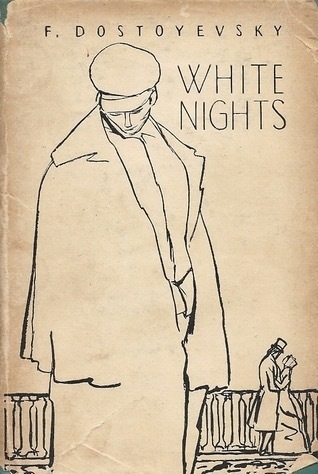
Author: Fyodor Dostoevsky Published: 1848
“My God! A whole minute of bliss! Is that really so little for the whole of a man's life?” “Oh, you know, Nastenka, we thank some people for merely living at the same time as we do. I thank you for the fact that I met you, that I will remember you for all my life!” “And you ask yourself: Where are your dreams? And you shake your head and say: How quickly do the years fly by! And again you ask yourself: What have you done with your years? Where have you buried your best days? Did you live or not?” “The sky was so starry, it was such a bright sky that looking at it you could not help but ask yourself: is it really possible for bad-tempered and capricious people to live under such a sky? That is also a young person's question, dear reader, a very young person's question, but may the Lord ask it of your heart more often! …” “Your fantastic world will grow pale, your dreams will wither, die and scatter like yellow leaves from the trees” “'why is it that we aren't all like brothers to one another? Why is it that the very best person is always hiding something from other people and is quiet about it? Why not say frankly and immediately what's in your heart, if you know that you're not speaking idly? As it is, everyone looks more severe than they actually are, as though they're all afraid their feelings will be hurt if they reveal them too soon …'” “It was a wonderful night, the kind of night, dear reader, which is only possible when we are young.” “It's always the old days with Grandmother! She was younger in the old days, and the sun was warmer in the old days, and cream didn't go sour so quickly in the old days – it's always the old days!”
solitude · longing · dreams
-

Author: Fyodor Dostoevsky Published: 1864
“I am a sick man...I am a wicked man. An unattractive man. I think my liver hurts.” “Shall the world go to hell, or shall I not have my tea? I say let the world go to hell, but I should always have my tea.” “I swear to you, gentlemen, that to be overly conscious is a sickness, a real, thorough sickness.” “In every man's memories there are such things as he will reveal not to everyone, but perhaps only to friends. There are also such as he will reveal not even to friends, but only to himself, and that in secret. Then, finally, there are such as a man is afraid to reveal even to himself, and every decent man will have accumulated quite a few things of this sort.” “And why not? There is also pleasure in a toothache.” “Not just wicked, no, I never even managed to become anything: neither wicked nor good, neither a scoundrel nor an honest man, neither a hero nor an insect.” “I even think the best definition of man is: a being that goes on two legs and is ungrateful.” “Leave us to ourselves, without a book, and we'll immediately get confused, lost - we won't know what to join, what to hold to, what to love and what to hate, what to respect and what to despise.” “Suppose all man ever does is search for this two times two is four; he crosses oceans, he sacrifices his life in the search; but to search it out, actually to find it - by God, he's somehow afraid. For he senses that once he finds it, there will be nothing to search for.” “Man loves creating and the making of roads, that is indisputable. But why does he so passionately love destruction and chaos as well? Tell me that!” “though your mind works, your heart is darkened by depravity, and without a pure heart there can be no full, right consciousness.” “We don't even know where the living lives now, or what it is, or what it's called!” “How can a man of consciousness have the slightest respect for himself?” “only among us can the most inveterate scoundrel be perfectly and even loftily honest in his soul, while not ceasing in the least to be a scoundrel.” “I turned coward not from cowardice, but from the most boundless vanity.” “man only likes counting his grief, he doesn't count his happiness. But if he were to count properly, he'd see that there's enough of both lots for him.”
free-will · alienation · consciousness
-

Author: Fyodor Dostoevsky Published: 1866
“I wonder, what are people most afraid of? A new step, their own new word, that's what they're most afraid of…” “"Where was it," Raskolnikov thought as he walked on, "where was it that I read about a man condemned to death saying or thinking, an hour before his death, that if he had to live somewhere high up on a cliffside, on a ledge so narrow that there was room only for his two feet—and with the abyss, the ocean, eternal darkness, eternal solitude, eternal storm all around him—and had to stay like that, on a square foot of space, an entire lifetime, a thousand years, an eternity—it would be better to live so than to die right now! Only to live, to live, to live! To live, no matter how—only to live!"” “It takes something more than intelligence to act intelligently.” “We keep imagining eternity as an idea that cannot be grasped, something vast, vast! But why must it be vast? Instead of all that, imagine suddenly that there will be one little room there, something like a village bathhouse, covered with soot, with spiders in all the corners, and that's the whole of eternity. I sometimes fancy something of the sort.” “I was not bowing to you, I was bowing to all human suffering” “No, life is given to me only once, and never will be again—I don't want to sit waiting for universal happiness. I want to live myself; otherwise it's better not to live at all.” “Go now, this minute, stand in the crossroads, bow down, and first kiss the earth you've defiled, then bow to the whole world, on all four sides, and say aloud to everyone: 'I have killed!' Then God will send you life again.” “Become a sun and everyone will see you. The sun must be the sun first of all.” “There's nothing in the world more difficult than candor, and nothing easier than flattery. If there is only the hundredth part of a false note in candor, there is immediately a dissonance, and then—scandal. But with flattery, even if everything is false down to the last little note, it is still agreeable and is listened to not without pleasure; crude though the pleasure may be, it is still a pleasure.” “Everyone became anxious, and no one understood anyone else; each thought the truth was contained in himself alone, and suffered looking at others, beat his breast, wept, and wrung his hands. They did not know whom or how to judge, could not agree on what to regard as evil, what as good.” “The truth won't go away, but life can be nailed shut; there are examples.” “Let him suffer, if he pities his victim…Suffering and pain are always obligatory for a broad consciousness and a deep heart.”
guilt · conscience · redemption
-

Author: Fyodor Dostoevsky Published: 1880
“do not lie to yourself. A man who lies to himself and listens to his own lie comes to a point where he does not discern any truth either in himself or anywhere around him, and thus falls into disrespect towards himself and others. Not respecting anyone, he ceases to love, and having no love, he gives himself up to passions and coarse pleasures, in order to occupy and amuse himself, and in his vices reaches complete bestiality, and it all comes from lying continually to others and to himself.” “The terrible thing is that beauty is not only fearful but also mysterious. Here the devil is struggling with God, and the battlefield is the human heart.” “'I love mankind,' he said, 'but I am amazed at myself: the more I love mankind in general, the less I love people in particular, that is, individually, as separate persons.'” “each of us is undoubtedly guilty on behalf of all and for all on earth, not only because of the common guilt of the world, but personally, each one of us, for all people and for each person on this earth.” “For the mystery of man's being is not only in living, but in what one lives for. Without a firm idea of what he lives for, man will not consent to live and will sooner destroy himself than remain on earth, even if there is bread all around him.” “Love all of God's creation, both the whole of it and every grain of sand. Love every leaf, every ray of God's light. Love animals, love plants, love each thing. If you love each thing, you will perceive the mystery of God in things.” “Remember especially that you cannot be the judge of anyone. For there can be no judge of a criminal on earth until the judge knows that he, too, is a criminal, exactly the same as the one who stands before him, and that he is perhaps most guilty of all for the crime of the one standing before him.” “"What is hell?" And I answer thus: "The suffering of being no longer able to love."” “the sticky little leaves that come out in the spring are dear to me, the blue sky is dear to me, some people are dear to me, whom one loves sometimes, would you believe it, without even knowing why” “It's still possible to love one's neighbor abstractly, and even occasionally from a distance, but hardly ever up close.” “Mother, heart of my heart, truly each of us is guilty before everyone and for everyone, only people do not know it, and if they knew it, the world would at once become paradise.” “The righteous man departs, but his light remains. People are always saved after the death of him who saved them.” “If a man stores up many such memories to take into life, then he is saved for his whole life. And even if only one good memory remains with us in our hearts, that alone may serve some day for our salvation.” “Above all, avoid lies, all lies, especially the lie to yourself. Keep watch on your own lie and examine it every hour, every minute. And avoid contempt, both of others and of yourself: what seems bad to you in yourself is purified by the very fact that you have noticed it in yourself.” “'If there is no immortality of the soul, then there is no virtue, and therefore everything is permitted.'” “"Mama," he answered her, "do not weep, life is paradise, and we are all in paradise, but we do not want to know it, and if we did want to know it, tomorrow there would be paradise the world over."” “all is like an ocean, all flows and connects; touch it in one place and it echoes at the other end of the world.” “You must know that there is nothing higher, or stronger, or sounder, or more useful afterwards in life, than some good memory, especially a memory from childhood, from the parental home.” “I suffer, and still I do not live.” “some such beautiful, sacred memory, preserved from childhood, is perhaps the best education.” “A man who lies to himself is often the first to take offense. It sometimes feels very good to take offense, doesn't it? And surely he knows that no one has offended him, and that he himself has invented the offense and told lies just for the beauty of it, that he has exaggerated for the sake of effect, that he has picked on a word and made a mountain out of a pea—he knows all of that, and still he is the first to take offense, he likes feeling offended, it gives him great pleasure, and thus he reaches the point of real hostility …” “Such grief does not even want consolation; it is nourished by the sense of its unquenchableness. Lamentations are simply the need to constantly irritate the wound.” “active love is a harsh and fearful thing compared with love in dreams. Love in dreams thirsts for immediate action, quickly performed, and with everyone watching.” “But to fall in love does not mean to love. One can fall in love and still hate. Remember that!” “Beauty is a fearful and terrible thing! Fearful because it's undefinable, and it cannot be defined, because here God gave us only riddles.” “Stupidity is brief and guileless, while reason hedges and hides. Reason is a scoundrel, stupidity is direct and honest.” “I think that if the devil does not exist, and man has therefore created him, he has created him in his own image and likeness.” “Indeed, people speak sometimes about the 'animal' cruelty of man, but that is terribly unjust and offensive to animals, no animal could ever be so cruel as a man, so artfully, so artistically cruel.” “There is no more ceaseless or tormenting care for man, as long as he remains free, than to find someone to bow down to as soon as possible.” “One can go through the world with a lie, but there is no going back.” “Don't believe it then, what good is faith by force? Besides, proofs are no help to faith, especially material proofs. Thomas believed not because he saw the risen Christ but because he wanted to believe even before that.” “In a man's most terrible moment, say, when he is being taken to his execution, it is precisely such trifles that stick in his memory. He will forget everything, but some green roof that flashes by on the way, or a jackdaw sitting on a cross—that he will remember.” “he who begets is not yet a father; a father is he who begets and proves worthy of it.” “One cannot live by rebellion, and I want to live.” “But man seeks to bow down before that which is indisputable, so indisputable that all men at once would agree to the universal worship of it.” “no memories are more precious to a man than those of his earliest childhood in his parental home, and that is almost always so, as long as there is even a little bit of love and unity in the family. But from a very bad family, too, one can keep precious memories, if only one's soul knows how to seek out what is precious.” “Much on earth is concealed from us, but in place of it we have been granted a secret, mysterious sense of our living bond with the other world, with the higher heavenly world, and the roots of our thoughts and feelings are not here but in other worlds.” “What's shame for the mind is beauty all over for the heart.” “He accumulates wealth in solitude, thinking: how strong, how secure I am now; and does not see, madman as he is, that the more he accumulates, the more he sinks into suicidal impotence.” “Everywhere now the human mind has begun laughably not to understand that a man's true security lies not in his own solitary effort, but in the general wholeness of humanity.” “Taking freedom to mean the increase and prompt satisfaction of needs, they distort their own nature, for they generate many meaningless and foolish desires, habits, and the most absurd fancies in themselves.” “But I'm not lying, it's all true; unfortunately, the truth is hardly ever witty.” “We are, on the contrary, even possessed—precisely possessed—by the noblest ideals, but only on condition that they be attained by themselves, that they fall on our plate from the sky, and, above all, gratuitously, gratuitously, so that we need pay nothing for them.” “I am writing a curse, yet I adore you! I hear it in my heart.” “Otherwise we are not fathers but enemies of our children, and they are not our children but our enemies, and we ourselves have made them our enemies!”
religion · free-will · suffering
-

Author: Friedrich Nietzsche Published: 1882
“God is dead! God remains dead! And we have killed him!” “Mystical explanations are considered deep; the truth is, they are not even shallow.” “I doubt that such pain makes us 'better' – but I know that it makes us deeper.” “Oh, those Greeks! They knew how to live: what is needed for that is to stop bravely at the surface, the fold, the skin; to worship appearance, to believe in shapes, tones, words – in the whole Olympus of appearance! Those Greeks were superficial – out of profundity!” “What makes one heroic? – To approach at the same time one's highest suffering and one's highest hope.” “What does your conscience say? – 'You should become who you are.'” “I want to learn more and more how to see what is necessary in things as what is beautiful in them – thus I will be one of those who make things beautiful. Amor fati: let that be my love from now on!” “For – believe me – the secret for harvesting from existence the greatest fruitfulness and the greatest enjoyment is – to live dangerously! Build your cities on the slopes of Vesuvius! Send your ships into uncharted seas! Live at war with your peers and yourselves!” “No victor believes in chance.” “For I approach deep problems such as I do cold baths: fast in, fast out.” “'This life as you now live it and have lived it you will have to live once again and innumerable times again; and there will be nothing new in it, but every pain and every joy and every thought and sigh and everything unspeakably small or great in your life must return to you, all in the same succession and sequence – even this spider and this moonlight between the trees, and even this moment and I myself. The eternal hourglass of existence is turned over again and again, and you with it, speck of dust!'” “To grow tired of a possession is to grow tired of ourselves.” “Here and there on earth there is probably a kind of continuation of love in which this greedy desire of two people for each other gives way to a new desire and greed, a shared higher thirst for an ideal above them. But who knows such love? Who has experienced it? Its true name is friendship.” “I approve of any form of scepticism to which I can reply, 'Let's try it!' But I want to hear nothing more about all the things and questions that don't admit of experiment. This is the limit of my 'sense of truth'; for there, courage has lost its right.” “The living is only a form of what is dead, and a very rare form.” “Life is not an argument; the conditions of life might include error.” “A dangerous decision. – The Christian decision to find the world ugly and bad has made the world ugly and bad.” “Those who know they are deep strive for clarity. Those who would like to seem deep to the crowd strive for obscurity. For the crowd takes everything whose ground it cannot see to be deep: it is so timid and so reluctant to go into the water.” “Thoughts are the shadows of our sensations – always darker, emptier, simpler.” “The most perfidious way of damaging a cause is deliberately to defend it with faulty arguments.” “One hears only those questions to which one is able to find an answer.” “What is originality? To see something that still has no name; that still cannot be named even though it is lying right before everyone's eyes. The way people usually are, it takes a name to make something visible at all. – Those with originality have usually been the name-givers.” “What is the seal of having become free'? – No longer to be ashamed before oneself.” “Let us then believe in our star friendship even if we must be earth enemies.” “we, however, want to be poets of our lives, starting with the smallest and most commonplace details.” “One pays dearly for any kind of mastery on earth, where perhaps one pays too dearly for everything; one is master of one's trade at the price of also being its victim.” “Where you stand, there dig deep! Below you lies the well! Let obscurantists wail and weep: 'Below is always – hell!'” “To find all things deep – that is an uncomfortable trait: it makes one constantly strain one's eyes and in the end always find more than one had wished.” “What we do is never understood but always merely praised and reproached.” “What is most human to you? – To spare someone shame.” “One thinks with a watch in hand, as one eats lunch with an eye on the financial pages – one lives like someone who might always 'miss out on something'.” “But what does unveil itself for us unveils itself for us only once! The Greeks, to be sure, prayed: 'Everything beautiful twice and thrice!' Indeed, they had good reason to summon the gods, for ungodly reality gives us the beautiful either never or only once!” “In some, it is their weaknesses that philosophize; in others, their riches and strengths.” “Better an enmity cut from one block than friendship held together by glue.” “pain is a much more sensitive means to that end than pleasure: pain always asks for the cause, while pleasure is inclined to stop with itself and not look back.” “Once you know that there are no purposes, you also know that there is no accident; for only against a world of purposes does the word 'accident' have a meaning.” “What do you believe in? – In this: that the weight of all things must be determined anew.” “For one must be able at times to lose oneself if one wants to learn something from things that we ourselves are not.” “Love, too, must be learned.” “At least there are truths that are especially shy and ticklish and can't be caught except suddenly – that one must surprise or leave alone.” “Stay not where the lowlands are! Climb not into the sky! The world looks best by far when viewed from halfway high.” “We are always rewarded in the end for our good will, our patience, our fair-mindedness and gentleness with what is strange, as it gradually casts off its veil and presents itself as a new and indescribable beauty. That is its thanks for our hospitality.”
the-death-of-god · amor-fati · truth
-
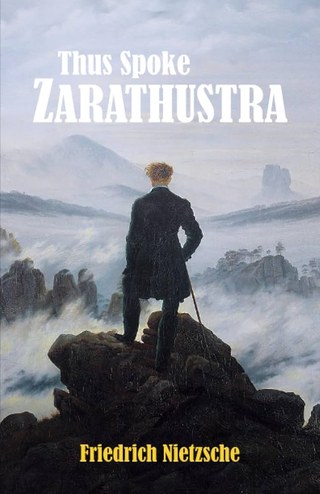
Author: Friedrich Nietzsche Published: 1883
“I say to you: one must still have chaos in oneself in order to give birth to a dancing star. I say to you: you still have chaos in you.” “Mankind is a rope fastened between animal and overman – a rope over an abyss.” “The greatest events – these are not our loudest, but our stillest hours.” “I teach you the overman . Human being is something that must be overcome. What have you done to overcome him?” “I would only believe in a god who knew how to dance.” “One repays a teacher badly if one always remains a pupil only.” “The stillest words are those that bring the storm. Thoughts that come on the feet of doves steer the world.” “What is great about human beings is that they are a bridge and not a purpose: what is lovable about human beings is that they are a crossing over and a going under .” “Of all that is written I love only that which one writes with his blood. Write with blood, and you will experience that blood is spirit.” “There is always some madness in love. But there is also always some reason in madness.” “A hermit is like a deep well. It is easy to throw in a stone; but once it has sunk to the bottom, tell me: who would fetch it up again?” “With thunder and heavenly fireworks one must speak to slack and sleeping senses. But the voice of beauty speaks softly; it creeps only into the most awakened souls.” “One person's loneliness is the escape of the sick; another's loneliness is the escape from the sick.” “But this is my teaching; whoever wants to fly someday must first learn to stand and walk and run and climb and dance – one cannot fly one's way to flight!” “"What does happiness matter!" he answered. "I haven't strived for happiness for a long time, I strive for my work."” “In one's friend one should have one's best enemy. You should be closest to him in heart when you resist him.” “"This – it turns out – is my way – where is yours?" – That is how I answered those who asked me "the way." The way after all – it does not exist!” “Have you ever said Yes to one joy? Oh my friends, then you also said Yes to all pain. All things are enchained, entwined, enamored –” “You revere me, but what if your reverence falls down some day? Beware that you are not killed by a statue!” “My wisdom has gathered itself for a long time like a cloud, it becomes stiller and darker. Thus does every wisdom that shall one day give birth to lightning.” “Truly, mankind is a polluted stream. One has to be a sea to take in a polluted stream without becoming unclean.” “You look upward when you long for elevation. And I look down because I am elevated.” “It is true: we love life not because we are accustomed to life but because we are accustomed to love.” “Many brief follies – that is what you call love. And your marriage makes an end of many brief follies, as one long stupidity.” “There are a thousand paths that have never yet been walked; a thousand healths and hidden islands of life. Human being and human earth are still unexhausted and undiscovered.” “Creating – that is the great redemption from suffering, and life's becoming light. But in order for the creator to be, suffering is needed and much transformation.” “What is silent in the father learns to speak in the son; and often I found the son to be the father's exposed secret.” “It is night: now all fountains speak more loudly. And my soul too is a fountain.” “But nowhere did I find home; I am unsettled in every settlement, and a departure at every gate.” “Not around the inventors of new noise does the world revolve, but around the inventors of new values; inaudibly it revolves.” “Not the height: the precipice is what is terrible! The precipice, where one's gaze plunges downward and one's hand grasps upward. There the heart is dizzy from its double will.” “Courage also slays dizziness at the abyss; and where do human beings not stand at the abyss? Is seeing itself not – seeing the abyss?” “Go ahead and do whatever you will – but first be the kind of people who can will !” “Being forsaken is one thing, solitude is another: that – you have now learned! And that among human beings you will always be wild and foreign.” “Not where you come from shall constitute your honor from now on, but instead where you are going! Your will and your foot, which wants to go over and beyond yourself – let that constitute your new honor!” “Even God has his hell: it is his love for mankind.” “all creators are hard, all great love is above pitying” “Your kingdom is beyond good and evil. It is your innocence not to know what innocence is.” “I learned to walk, since then I let myself run. I learned to fly, since then I do not wait to be pushed to move from the spot.” “The more they aspire to the heights and the light, the more strongly their roots strive earthward, downward, into darkness, depths – into evil.” “But the state lies in all the tongues of good and evil – and whatever it may tell you, it lies – and whatever it has, it has stolen.” “Where solitude ends, there begins the market place; and where the market place begins, there begins too the noise of the great actors and the buzzing of poisonous flies.” “Not only he lies who speaks though he knows better, but the real liar is the one who speaks though he knows nothing.” “One person goes to his neighbor because he seeks himself, and the other because he would like to lose himself. Your bad love of yourselves makes your loneliness into a prison.” “The bottom of my sea is calm – who would guess that it conceals playful monsters?” “Whatever one brings into solitude grows in it, even the inner beast. On this score, solitude is ill-advised for many.” “A person's stride betrays whether one is striding on his course: just look at me walk! But whoever approaches his goal dances.” “There is more reason in your body than in your best wisdom. And who knows then to what end your body requires precisely your best wisdom?” “I am a railing by the torrent: grasp me whoever is able to grasp me! But your crutch I am not.” “Some souls will never be discovered, unless they are first invented.” “In your dying your spirit and your virtue should still glow, like a sunset around the earth; or else your dying has failed you.” “You had not yet sought yourselves, then you found me. All believers do this; that's why all faith amounts to so little.” “It is difficult to live with people because remaining silent is so difficult.” “Blood is the worst witness of truth; blood poisons even the purest teaching into delusion and hatred of the heart.” “whoever is not a bird should not build nests over abysses.” “One has to learn to love oneself – thus I teach – with a hale and healthy love, so that one can stand oneself and not have to roam around.” “And true enough, this is not a command for today and tomorrow, this learning to love oneself. Instead, of all arts this is the most subtle, cunning, ultimate and most patient.” “"Why so hard!" – the kitchen coal once said to the diamond. "Are we not close relatives?"” “How lovely it is that there are words and sounds; aren't words and sounds rainbows and illusory bridges between things eternally separated?” “Whoever has heart knows fear, but conquers fear ; sees the abyss, but with pride .” “Crookedly all good things approach their goal. Like cats they arch their backs, they purr inwardly with their impending happiness – all good things laugh.” “joy, even if pain is deep: Joy is deeper still than misery.” “You have made your way from worm to human, and much in you is still worm. Once you were apes, and even now a human is still more ape than any ape.” “And may everything break that can possibly be broken by our truths! Many a house has yet to be built!” “Good songs want to reverberate well; one should remain silent for a long time after good songs.”
self-overcoming · ubermensch · eternal-recurrence
-
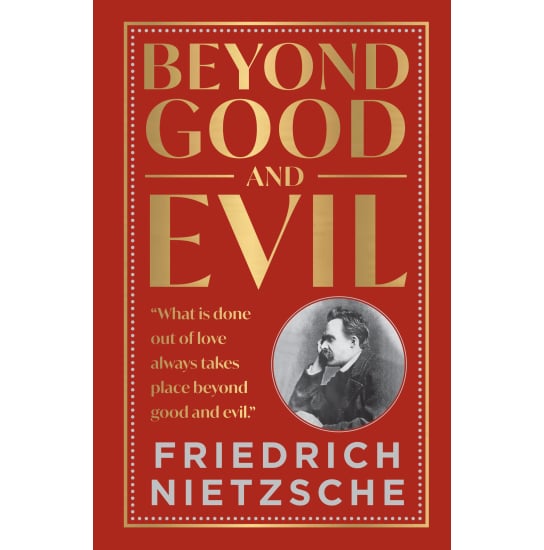
Author: Friedrich Nietzsche Published: 1886
“"I did that" says my memory. I couldn't have done that – says my pride, and stands its ground. Finally, memory gives in.” “Whoever fights with monsters should see to it that he does not become one himself. And when you stare for a long time into an abyss, the abyss stares back into you.” “Madness is rare in the individual – but with groups, parties, peoples, and ages it is the rule.” “It is not the strength but the duration of high feelings that makes for high men.” “The great epochs of our lives come when we gather the courage to reconceive our evils as what is best in us.” “In the end, we love our desires and not the thing desired.” “Every profound thinker is more afraid of being understood than of being misunderstood. The latter might hurt his vanity; but the former hurts his heart and his sympathy which always says: "Oh, why do you want things to be as hard for you as they are for me?"” “I have gradually come to realize what every great philosophy so far has been: a confession of faith on the part of its author, and a type of involuntary and unself-conscious memoir; in short, that the moral (or immoral) intentions in every philosophy constitute the true living seed from which the whole plant has always grown.” “Everything profound loves masks; the most profound things go so far as to hate images and likenesses.” “Whatever is done out of love takes place beyond good and evil.” “The light from the furthest stars is the last to come to people; and until it has arrived, people will deny that there are – stars out there.” “Every philosophy conceals a philosophy too: every opinion is also a hiding place, every word is also a mask.” “The thought of suicide is a strong means of comfort: it helps get us through many an evil night.” “There are heights of the soul from whose vantage point even tragedy stops having tragic effects.” “Not to be stuck to any person, not even somebody we love best – every person is a prison and a corner.” “You have been a poor observer of life if you have not also seen the hand that, ever so gently – kills.” “Human maturity: this means rediscovering the seriousness we had towards play when we were children.” “The more abstract the truth you want to teach, the more you have to seduce the senses to it.” “there is a drop of cruelty even in every wanting-to-know.” “When you have finished building your house, you suddenly notice that you have learned something in the process that you absolutely needed to know before you started building. The eternal, tiresome "too late!" – The melancholy of everything finished ! . . .” “The greatest events and thoughts – but the greatest thoughts are the greatest events – are the last to be comprehended: generations that are their contemporaries do not experience these sorts of events, – they live right past them.” “It is not the worst things that we are the most ashamed of.” “Knowledge would have little charm if there were not so much shame to be overcome in order to reach it.” “Precisely by attaining an ideal, we surpass it.” “When we discipline our conscience, it kisses us while it bites.” “Isn't life a hundred times too short to be bored?” “In a hermit's writings, you can always hear something of the echo of the desert, something of the whisper and the timid sideways glance of solitude.” “As if "the Truth" were such a harmless and bungling little thing that she needed defenders!” “We are best punished for our virtues.” “we learn to despise when we love and precisely when we love the most.” “What someone is begins to reveal itself when his talent diminishes – when he stops showing what he can do. So talent is also a piece of finery; and finery is also a hiding place.” “Talking frequently about yourself can also be a way of hiding.” “Vanity is perhaps one of the most difficult things for a noble person to comprehend”
morality · will-to-power · truth
-

Author: Friedrich Nietzsche Published: 1887
“We are unknown to ourselves, we knowers : and for a good reason. We have never sought ourselves—how then should it happen that we find ourselves one day?” “man would much rather will nothingness than not will …” “there is no "being" behind the doing, effecting, becoming; "the doer" is simply fabricated into the doing—the doing is everything.” “A spirit who is sure of itself, however, speaks softly; it seeks seclusion, it makes others wait.” “anyone who ever built a "new heaven" first found the power to do so in his own hell …” “What actually arouses indignation against suffering is not suffering in itself, but rather the senselessness of suffering” “only that which has no history is definable .” “All instincts that do not discharge themselves outwardly turn themselves inwards—this is what I call the internalizing of man: thus first grows in man that which he later calls his "soul."” “any meaning is better than no meaning at all” “Precisely here lies Europe's doom—with the fear of man we have also forfeited the love of him, the reverence toward him, the hope for him, indeed the will to him. The sight of man now makes tired—what is nihilism today if it is not that ? … We are tired of man …” “not being able to avenge oneself is called not wanting to avenge oneself, perhaps even forgiveness” “Without cruelty, no festival: thus teaches the oldest, longest part of man's history—and in punishment too there is so much that is festive !—” “The darkening of the heavens over man has always increased proportionally as man has grown ashamed of man .” “So that a sanctuary can be erected, a sanctuary must be shattered : that is the law—show me a case where it is not fulfilled!” “All good things were once bad things; every original sin has become an original virtue.” “what meaning would our entire being have if not this, that in us this will to truth has come to a consciousness of itself as a problem?” “Man, the bravest animal and the one most accustomed to suffering, does not negate suffering in itself: he wants it, he even seeks it out, provided one shows him a meaning for it, a to-this-end of suffering.” “the powerlessness that does not retaliate into kindness; fearful baseness into 'humility'; subjection to those whom one hates into 'obedience'” “This workplace where they fabricate ideals—it seems to me it stinks of sheer lies.” “In general, punishment makes hard and cold; it concentrates; it sharpens the feeling of alienation; it strengthens the power of resistance.” “For all too long man has regarded his natural inclinations with an "evil eye," so that in him they have finally become wedded to "bad conscience."” “One can recognize a philosopher by the fact that he keeps clear of three bright and loud things: fame, princes, and women—which is not to say they don't come to him.” “"I am who I am: how could I get free from myself. And yet—I am fed up with myself!" …” “A strong and well-formed human digests his experiences (deeds, misdeeds included) as he digests his meals, even when he has hard bites to swallow.” “there could be no happiness, no cheerfulness, no hope, no pride, no present without forgetfulness” “The justice that began with "everything can be paid off, everything must be paid off," ends by looking the other way and letting the one unable to pay go free,— it ends like every good thing on earth, by cancelling itself .” “a Homer would not have written an Achilles nor Goethe a Faust if Homer had been an Achilles or if Goethe had been a Faust.” “That someone feels "guilty," "sinful" does not at all prove he is right in feeling so; just as little as someone is healthy merely because he feels healthy.” “everywhere on earth where there is still solemnity, seriousness, secrecy, gloomy colors in the life of man and of a people, something of that terribleness continues to be felt with which everywhere on earth one formerly promised, pledged, vowed: the past, the longest deepest hardest past, breathes on us and wells up in us when we become "serious."” “What is there that insults more deeply, that separates off so fundamentally, as letting others notice something of the strictness and height with which one treats oneself ?”
morality · ressentiment · guilt
-

Author: Muhammad Iqbal Published: 1913
“Words spoken from the heart never fail to have effect; Sacred and pure their origin, on the lofty heights their sights are set. They have no wings and yet they have power to fly; They rise from the dust and pierce through the sky.” “A people are bound by faith; without faith they cease to be; If nothing binds you, you are like meteors, not stars in a galaxy.” “You are but a tiny speck; to infinite vastness let it increase; You are only the wave's murmur; turn it to the roar of the raging sea.” “With reason as your shield and the sword of love in your hand. Servant of God! the leadership of the world is at your command.” “A lost and wandering people towards Hejaz turn their longing eyes, As a wingless bulbul takes to wing for the love of open skies.” “Even today if Abraham's faith could be made to glow; Out of Nimrod's fire a garden of flowers would grow.” “The flame of truth is not snuffed out by the breath the enemy blows.” “You will not be destroyed even if Iran went into decline; The shape of a goblet bears not on the headlines of the wine.”
islam · devotion · awakening
-
Author: Muhammad Iqbal Published: 1915
“Man wins territory by prowess in battle, But his brightest jewel is mastery of himself.” “If thou wouldst pass away, become free of Self; If thou wouldst live, become full of Self!” “He that does not command himself Becomes a receiver of commands from others.” “Be self-contained like the rose in the garden, Do not go to the florist in order to smell sweet!” “The true nature of time is reached when we look into our deeper self.” “Endeavour to obey, O heedless one! Liberty is the fruit of compulsion.” “Whoso would master the sun and stars, Let him make himself a prisoner of Law!” “Whoever is sunk in the depths of ignominy Calls his weakness contentment.” “Thou hast fled, like a scent, from thine own garden; Thou hast made thy prison with thine own hand.” “We live by forming ideals, We glow with the sunbeams of desire!” “Sweet is a little dew gathered by one's own hand.” “Though trodden underfoot, the grass grows up time after time And washes the sleep of death from its eye again and again.” “"To die," said he, "is the secret of Life: The candle is glorified by being put out."” “Life envies Death when death is for thy sake.”
islam · selfhood · love
-
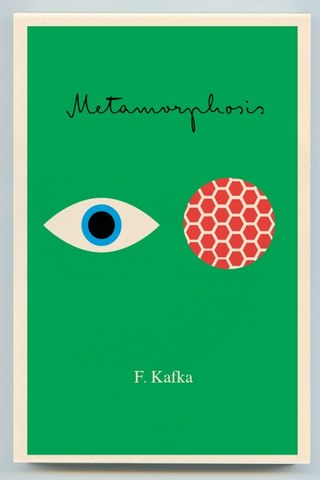
Author: Franz Kafka Published: 1915
“When Gregor Samsa woke one morning from troubled dreams, he found himself transformed right there in his bed into some sort of monstrous insect.” “since he himself could not be understood, it occurred to no one, not even his sister, that he could understand the others” “Was he a beast, that music so moved him? He felt as if he were being shown the way to that unknown nourishment he craved.” “Did he really want to have this warm room, comfortably furnished with family heirlooms, transformed into a cave or den—in which, to be sure, he would be able to crawl about unhindered in every direction, but at the price of simultaneously swiftly and completely forgetting his human past?” “It scarcely surprised him that he had become so inconsiderate of the others; earlier on, his considerateness had been a source of pride.” “family duty dictated that the others swallow down the disgust he aroused in them and show him tolerance, only tolerance.” “You just have to try to let go of the notion that this thing is Gregor. The real disaster is that we believed this for so long.” “And for a little while he lay there quietly, his breathing shallow, in the expectation, perhaps, that this perfect silence might possibly restore the real and ordinary state of things.”
alienation · absurd · dehumanization
-

The Reconstruction of Religious Thought in Islam
Author: Muhammad Iqbal Published: 1930
“The universe which seems to us to be a collection of things is not a solid stuff occupying a void. It is not a thing but an act.” “We become by ceasing to be what we are. Life is a passage through a series of deaths.” “The truth is that all search for knowledge is essentially a form of prayer.” “Vision without power does bring moral elevation but cannot give a lasting culture. Power without vision tends to become destructive and inhuman. Both must combine for the spiritual expansion of humanity.” “Religion is not a departmental affair; it is neither mere thought, nor mere feeling, nor mere action; it is an expression of the whole man.” “Man's first act of disobedience was also his first act of free choice.” “There is no such thing as a profane world. All this immensity of matter constitutes a scope for the self-realization of spirit. All is holy ground.” “The ultimate aim of the ego is not to see something, but to be something.” “Hard his lot and frail his being, like a rose-leaf, yet no form of reality is so powerful, so inspiring, and so beautiful as the spirit of man!” “That is most real to us which stirs up the entire fabric of our personality.” “That God has taken this risk shows His immense faith in man; it is for man now to justify this faith.” “Prayer, then, whether individual or associative, is an expression of man's inner yearning for a response in the awful silence of the universe.” “Heaven and Hell are states, not localities.” “the ultimate fate of a people does not depend so much on organization as on the worth and power of individual men. In an over-organized society the individual is altogether crushed out of existence. He gains the whole wealth of social thought around him and loses his own soul.” “No people can afford to reject their past entirely, for it is their past that has made their personal identity.” “every moment in the life of Reality is Original, giving birth to what is absolutely novel and unforeseeable.” “We can derive "things" from movement; we cannot derive movement from immobile things.” “What we call Nature or the not-self is only a fleeting moment in the life of God.” “In order to achieve this intimacy thought must rise higher than itself, and find its fulfilment in an attitude of mind which religion describes as prayer.” “a false reverence for past history and its artificial resurrection constitute no remedy for a people's decay.” “If your heart is not deceived by the mirage, be not proud of the sharpness of your understanding; for your freedom from this optical illusion is due to your imperfect thirst.” “You have perceived the thing as it is because you were not interested in perceiving it as it is not.” “In matters of spiritual valuation mere immensity counts for nothing.” “It is in its progressive participation in the life of the apparently alien that thought demolishes the walls of its finitude and enjoys its potential infinitude.” “No one can stand unshaken in His Presence; And he who can, verily, he is pure gold.”
islam · philosophy-of-religion · selfhood
-
Author: Albert Camus Published: 1942
“There is but one truly serious philosophical problem and that is suicide. Judging whether life is or is not worth living amounts to answering the fundamental question of philosophy.” “The struggle itself towards the heights is enough to fill a man's heart. One must imagine Sisyphus happy.” “In the middle of winter, I at last discovered that there was in me an invincible summer.” “The absurd is born of this confrontation between the human need and the unreasonable silence of the world.” “There is no sun without shadow, and it is essential to know the night.” “The absurd does not liberate; it binds. It does not authorize all actions. Everything is permitted does not mean that nothing is forbidden.” “There is no fate that cannot be surmounted by scorn.” “Happiness and the absurd are two sons of the same earth. They are inseparable.” “I have never seen anyone die for the ontological argument.” “Likewise and during every day of an unillustrious life, time carries us. But a moment always comes when we have to carry it.” “Yet one will never be sufficiently surprised that everyone lives as if no one 'knew'.” “what counts is not the best living but the most living.” “If it were sufficient to love, things would be too easy. The more one loves the stronger the absurd grows.” “And that is, indeed, genius: the intelligence that knows its frontiers.” “A man is more a man through the things he keeps to himself than through those he says.” “If the world were clear, art would not exist.” “But crushing truths perish from being acknowledged.” “No truth fails to carry with it its bitterness.” “There are no more deserts. There are no more islands. Yet there is a need for them. In order to understand the world, one has to turn away from it on occasion; in order to serve men better, one has to hold them at a distance for a time.” “I know simply that this sky will last longer than I. And what shall I call eternity except what will continue after my death?” “From Pandora's box, where all the ills of humanity swarmed, the Greeks drew out hope after all the others, as the most dreadful of all. I know no more stirring symbol; for, contrary to the general belief, hope equals resignation. And to live is not to resign oneself.” “Thinking ceases to be unifying or making a semblance familiar in the guise of a major principle. Thinking is learning all over again to see, to be attentive, to focus consciousness; it is turning every idea and every image, in the manner of Proust, into a privileged moment.” “A man devoid of hope and conscious of being so has ceased to belong to the future.” “The only thought to liberate the mind is that which leaves it alone, certain of its limits and of its impending end.” “At that subtle moment when man glances backward over his life, Sisyphus returning towards his rock, in that slight pivoting, he contemplates that series of unrelated actions which becomes his fate, created by him, combined under his memory's eye and soon sealed by his death.” “Thus, convinced of the wholly human origin of all that is human, a blind man eager to see who knows that the night has no end, he is still on the go. The rock is still rolling.” “I leave Sisyphus at the foot of the mountain! One always finds one's burden again.” “These are our nights of Gethsemane. But crushing truths perish from being acknowledged.” “Many, in fact, feign love of life to evade love itself.” “We get into the habit of living before acquiring the habit of thinking. In that race which daily hastens us towards death, the body maintains its irreparable lead.” “It is always easy to be logical. It is almost impossible to be logical to the bitter end.” “Above all, a man's thought is his nostalgia.” “I have seen people behave badly with great morality and I note every day that integrity has no need of rules.” “There is so much stubborn hope in the human heart. The most destitute men often end up by accepting illusion.” “The world never says but one thing; first it interests, then it bores. But eventually it wins out by dint of obstinacy. It is always right.”
absurd · meaning · revolt
-
Author: Albert Camus Published: 1942
“Maman died today. Or yesterday maybe, I don't know.” “As if that blind rage had washed me clean, rid me of hope; for the first time, in that night alive with signs and stars, I opened myself to the gentle indifference of the world.” “He seemed so certain about everything, didn't he? And yet none of his certainties was worth one hair of a woman's head.” “I knew that I had shattered the harmony of the day, the exceptional silence of a beach where I'd been happy. Then I fired four more times at the motionless body where the bullets lodged without leaving a trace. And it was like knocking four quick times on the door of unhappiness.” “Deep down I knew perfectly well that it doesn't much matter whether you die at thirty or at seventy, since in either case other men and women will naturally go on living—and for thousands of years.” “Everybody was privileged. There were only privileged people. The others would all be condemned one day.” “I hadn't understood how days could be both long and short at the same time: long to live through, maybe, but so drawn out that they ended up flowing into one another. They lost their names. Only the words "yesterday" and "tomorrow" still had any meaning for me.” “Yes, it was the hour when, a long time ago, I was perfectly content. What awaited me back then was always a night of easy, dreamless sleep. And yet something had changed, since it was back to my cell that I went to wait for the next day … as if familiar paths traced in summer skies could lead as easily to prison as to the sleep of the innocent.”
absurd · alienation · mortality
-
Author: Ernest Becker Published: 1973
“Man is literally split in two: he has an awareness of his own splendid uniqueness in that he sticks out of nature with a towering majesty, and yet he goes back into the ground a few feet in order blindly and dumbly to rot and disappear forever.” “It is fateful and ironic how the lie we need in order to live dooms us to a life that is never really ours.” “Let sanguine healthy-mindedness do its best with its strange power of living in the moment and ignoring and forgetting, still the evil background is really there to be thought of, and the skull will grin in at the banquet.” “The great boon of repression is that it makes it possible to live decisively in an overwhelmingly miraculous and incomprehensible world, a world so full of beauty, majesty, and terror that if animals perceived it all they would be paralyzed to act.” “As Goethe put it, we must plunge into experience and then reflect on the meaning of it. All reflection and no plunging drives us mad; all plunging and no reflection, and we are brutes.” “character is a face that one sets to the world, but it hides an inner defeat.” “The prison of one's character is painstakingly built to deny one thing and one thing alone: one's creatureliness. The creatureliness is the terror.” “What does it mean to be a self-conscious animal? The idea is ludicrous, if it is not monstrous. It means to know that one is food for worms.” “Creation is a nightmare spectacular taking place on a planet that has been soaked for hundreds of millions of years in the blood of all its creatures.” “he is out of nature and hopelessly in it; he is dual, up in the stars and yet housed in a heart-pumping, breath-gasping body that once belonged to a fish and still carries the gill-marks to prove it.” “To grow up at all is to conceal the mass of internal scar tissue that throbs in our dreams.” “Man's very insides—his self—are foreign to him. He doesn't know who he is, why he was born, what he is doing on the planet, what he is supposed to do, what he can expect.” “Even in our passions we are nursery children playing with toys that represent the real world. Even when these toys crash and cost us our lives or our sanity, we are cheated of the consolation that we were in the real world instead of the playpen of our fantasies.” “Freud summed it up beautifully when he somewhere remarked that psychoanalysis cured the neurotic misery in order to introduce the patient to the common misery of life. Neurosis is another word for describing a complicated technique for avoiding misery, but reality is the misery.” “Full humanness means full fear and trembling, at least some of the waking day.” “to live is to feel oneself lost—he who accepts it has already begun to find himself, to be on firm ground.” “human meanings are fragile, ephemeral: they are constantly being discredited by historical events and natural calamities. One Hitler can efface centuries of scientific and religious meanings; one earthquake can negate a million times the meaning of a personal life.” “Men don't become slaves out of mere calculating self-interest; the slavishness is in the soul.” “People create the reality they need in order to discover themselves.” “it is just as unbearable to be God as it is to remain an utter slave.” “Sex is of the body, and the body is of death.” “the more you develop as a distinctive free and critical human being, the more guilt you have. Your very work accuses you; it makes you feel inferior. What right do you have to play God?” “men aren't built to be gods, to take in the whole world; they are built like other creatures, to take in the piece of ground in front of their noses.” “The daily madness of these jobs is a repeated vaccination against the madness of the asylum.” “Beyond a given point man is not helped by more "knowing," but only by living and doing in a partly self-forgetful way.” “to live is to play at the meaning of life. The upshot of this whole tradition of thought is that it teaches us once and for all that childlike foolishness is the calling of mature men.” “in some way one must pay with life and consent daily to die, to give oneself up to the risks and dangers of the world, allow oneself to be engulfed and used up. Otherwise one ends up as though dead in trying to avoid life and death.” “All cultural contrivances are self-hypnotic devices—from motorcars to moon rockets—ways that a sorely limited animal can drum up to fascinate himself with the powers of transcendence over natural reality.” “The biggest, warmest, most secure, courageous spirits can still only bite off pieces of the world; the smallest, meanest, most frightened ones merely bite off the smallest possible pieces.” “The heaviest crosses are internal and men make them so that, thus skeletally supported, they can bear the burden of their flesh.” “it takes sixty years of incredible suffering and effort to make such an individual, and then he is good only for dying.” “taking life seriously means something such as this: that whatever man does on this planet has to be done in the lived truth of the terror of creation, of the grotesque, of the rumble of panic underneath everything. Otherwise it is false.” “The most that any one of us can seem to do is to fashion something—an object or ourselves—and drop it into the confusion, make an offering of it, so to speak, to the life force.” “He literally drives himself into a blind obliviousness with social games, psychological tricks, personal preoccupations so far removed from the reality of his situation that they are forms of madness—agreed madness, shared madness, disguised and dignified madness, but madness all the same.” “man is a worm and food for worms.” “There is no secure answer to the awesome mystery of the human face that scrutinizes itself in the mirror; no answer, at any rate, that can come from the person himself, from his own center.” “the road to creativity passes so close to the madhouse and often detours or ends there.” “But as soon as a man lifts his nose from the ground and starts sniffing at eternal problems like life and death, the meaning of a rose or a star cluster—then he is in trouble.” “To live is to engage in experience at least partly on the terms of the experience itself. One has to stick his neck out in the action without any guarantees about satisfaction or safety.” “As I go on in this life, day by day, I become more of a bewildered child; I cannot get used to this world, to procreation, to heredity, to sight, to hearing; the commonest things are a burthen.” “The soberest conclusion that we could make about what has actually been taking place on the planet for about three billion years is that it is being turned into a vast pit of fertilizer.” “Therefore in normal times we move about actually without ever believing in our own death, as if we fully believed in our own corporeal immortality.” “In the prison of one's character one can pretend and feel that he is somebody, that the world is manageable, that there is a reason for one's life, a ready justification for one's action.” “Man is the only organism in nature fated to puzzle out what it actually means to feel "right."” “But not everybody can do this because many of us need the lie in order to live.” “Character is the restrictive shaping of possibility.” “If repression makes an untenable life liveable, self-knowledge can entirely destroy it for some people.” “For centuries man lived in the belief that truth was slim and elusive and that once he found it the troubles of mankind would be over. And here we are in the closing decades of the 20th century, choking on truth.” “Life seeks to expand in an unknown direction for unknown reasons.”
mortality · self-deception · heroism


